Episode 59:
- Connecting with nature fosters personal growth and resilience.
- Community plays a crucial role in individual well-being.
- Mentoring is about drawing out the light in others.
- Nature can be a powerful teacher and healer.
- Building relationships with nature takes time and patience.
- The Living Earth School offers programs for all ages to connect with nature.
- Hub Knott emphasizes the importance of values and a code of conduct.
- Creating spaces for belonging can combat loneliness.
- The power of storytelling in cultural and personal development.
- Nature connection schools aim to make themselves obsolete by integrating nature into daily life.
find this episode on youtube
Chapters
00:00:00 Introduction and Hub’s Background
00:03:00 Journey to the Wilderness
00:09:00 Mentoring and Community Building
00:15:00 Nature’s Role in Healing
00:21:00 Living Earth School and Future Vision
Bio
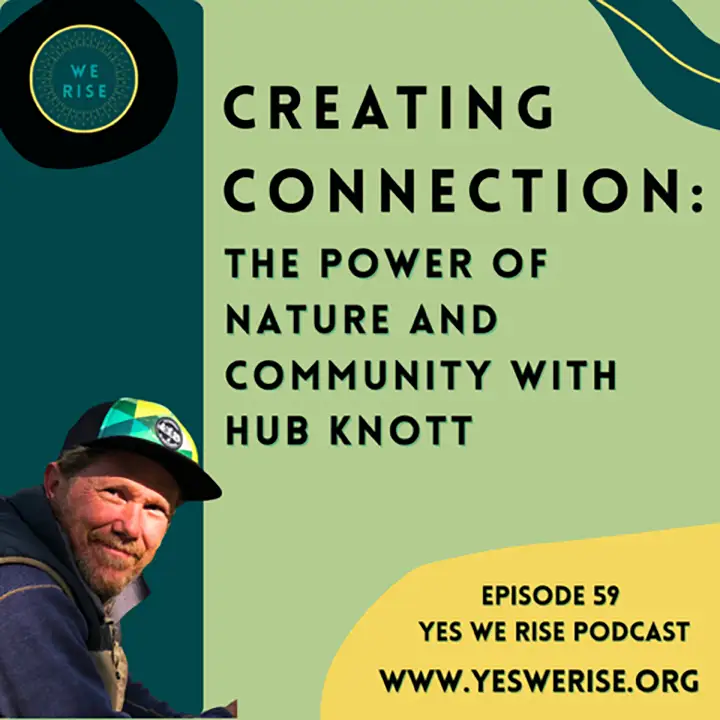
Hub Knott is a lover of life and the wild, first and foremost. It is the natural world that taught him how to find a life of purpose and where he fits into the web. He is an author, and Co-Founder and Executive Director of the award-winning Living Earth School, based in Charlottesville, Virginia.
Dedicated to community building, nature connection and mentoring, Hub has spent the past 25 years collecting and sharing “seeds”—practices that help people connect to nature and their deeper core selves in meaningful, lasting ways. He is known for bringing his infectious curiosity, humor, inspiring stories, and art of questioning to his teachings. He leads workshops, speaks publicly, and consults.
Hub lives along the Blue Ridge Mountains in Afton, VA, in a special hollow with lots of fruit trees and berry bushes. He loves to paddle rivers, wander in the mountains, and sink deeper into place.
From the Navajo Nation to the mountains of Appalachia, incredible work is being done by community members and leaders. Change is often sparked by inspiration: seeing what others have done, especially in similar situations and places. People see that when someone looks like them or lives in a place like theirs, and has created real, true and lasting change, change that will allow their granddaughters and grandsons to thrive — they begin to imagine what might be possible for them. No longer waiting for someone else to come and save them, they realize they are the ones they have been waiting for. But what creates that spark? What creates that inspiration? Learning through stories and examples, feeling a sense of agency and belonging, and getting fired up to kick ass creates that spark.
We Rise helps community leaders and members learn to forge a new path toward creating resilience and true transformation. One person at a time, one community at a time, one region at a time, the quilt of transformation can grow piece by piece until resilience becomes the norm instead of the exception. Together, we rise.
Links/Resources Mentioned:
The Yes! We Rise podcast is produced by Dialogue + Design Associates, Worthfull Media, music by Drishti Beats.
Follow Yes! We Rise on Facebook and Instagram.
Please rate, review, and subscribe to the podcast so we can continue spreading our message far and wide. Find our email list at the website: yeswerise.org. Thanks for listening.
Transcript
Episode 59 of the We Rise podcast
Hub Knott (00:00)
And the vision, mean, it’s like, I think something I’ve recognized that’s really challenging for us today in our cultures. don’t have like that cultural story that we all buy in. Like Bushman told stories around the fire. Some of these other native cultures, that I’ve been around a lot. They have a pedagogy of stories they tell that has their values embedded in it, has their code of conduct, has how they care for the land all in these stories. And
Christine Gyovai (00:07)
Mmm. Mmm.
Hub Knott (00:23)
people hear those stories year after year after year, and it becomes the fiber they’re being. Whereas we have all these disagreements on the stories and the things that we want. We don’t have aligned vision. I think it makes it really hard for us. for, when I work with people, I try to just keep it on nature. one of the people I work with, says like, let nature do the work. So just kind of get people out there and let nature right people’s minds.
Christine Gyovai (00:35)
creating the conditions. ., for connection and healing.
Christine Gyovai (00:57)
Thanks so much for joining the We Rise podcast. Really delighted to have you on today and just really excited to share more about who you are and the work that you do with folks. So welcome and tell us a little bit about yourself.
Hub Knott (01:11)
Thank you, Christine. ⁓ well, I grew up in Baltimore and quickly realized I didn’t want to be here forever. How like, I liked the woods and I always tended towards the woods as a kid. And when I got graduated high school, I took, went west and explored the mountains of the west and fell in love with the woods. And,
.. And it just became part of my life, became my sanctuary and spent a lot of alone time up in the mountains in Oregon. Um, partly because I just couldn’t get friends to go with me. I did that, but I remember sitting on a peak called Diamond Peak, which is like a volcano peak with snow. It was like a perfect dome on top and it was above tree line. I remember sitting up there in all the beauty, just old growth forest going on, these sisters peaks and being up there. I’ve got to share this with other people.
Christine Gyovai (01:44)
Hmm.
Hub Knott (01:59)
And then that kind of stayed in the back of my head. And eventually I was working with some mentors. I’ve had been fortunate to have some amazing mentors when I, after 18 that stepped into my life, that saw more in me than I saw myself. And they kind of carried me along and ones like this guy, John Young is like, you’re going to teach someday. And I’m like, no, I’m not. Cause I did not like getting up in front of people. I didn’t have confidence for it at the time. So he kept saying that.
Christine Gyovai (02:07)
Hub Knott (02:25)
And then somehow I remember sitting out there in the woods or in the desert of Oregon with a bunch of teenagers. I’m like, darn, I’m here. And then that grew into moving back East. Cause I really want to do something for the Chesapeake Bay watershed. Be a part of the place that I grew up on the water and the souls that I love. And so I came back East and then co-founded living Earth school and it
Christine Gyovai (02:33)
Here you are.
Hub Knott (02:51)
Partly just on a whim, people kept asking us to do more programs. So we started as a for-profit because that was the easiest model I knew at time. Eventually we became a nonprofit because I was really wanting to be able to allow people to be in our outdoor programs that couldn’t afford it as well. So that made the shift to the nonprofit, but we’ve been doing it for 23 years now, a team of about 10 full-time staff.
Christine Gyovai (02:58)
.. Yep.
Hub Knott (03:15)
And then the summer, swells a lot more, but it’s just been great to work with kids from age five all the way up to 80 years old, sometimes older. And so we work with all ages and it’s just a lot of fun to help people come into relationship with nature.
Christine Gyovai (03:23)
Well… beautiful. Helping
people come into relationship with nature. That’s just…
Hub Knott (03:34)
.. And themselves in them. One of my
elder, native elders always said like, when you get right with nature, you’ll get right with yourself. Then he’s like, then you’ll get right with the creator. So I always love that.
., ., absolutely. Beautiful, I want to go back to something you said a moment ago. You talked about, that Native American elder that you just referred to, when you get into right relationship with nature, you get into right relationship with yourself, I think was the gist of what you said. Can you talk a little bit about what it was like when you went west and you talked about that experience of being at the peak?
in the mountains and in the woods. What was it? Was it an inner experience that you felt that connection? Can you tell us a little bit more about what that experience and relationship with nature was like when you first kind of recognized the feeling?
Hub Knott (04:21)
Right.
Well, when I first started exploring the woods out there, I covered a lot of land because I thought getting out nature meant, you know, in a way bagging a lot of peaks, crushing the miles on the trails. And then I a plant class at the community college in Eugene and I started learning the plants. And then whenever I walked, I started seeing plants that were familiar and eventually learned how to use those plants for medicine and to make crafts and make fire. And so I came into relationship with these things and
Christine Gyovai (04:33)
Right, right, right.
totally.
Hub Knott (04:50)
I was sitting on that peak that day. was looking, watching the sunset over the coastal range of Oregon. And then something, somehow I just turned back and looked at the same time, the full moon was rising in the East over the three sisters peaks. And I was like in total blown away all of just like, I think all is what wakes people up a lot of those moments. So I saw those two and I’m like, I had no idea that happened.
Hub Knott (05:14)
when the full moon rises, the sun is setting at same time. And that was like a beautiful moment. like, I gotta share this with people. This is incredible. So it was kind of an inner feeling, but it was spawned by what I was witnessing in life. So, ..
Christine Gyovai (05:22)
Hmm.
beautiful.
So I’m going to come back to the living or school in a little bit and about your work and community, but I want to continue this thread a little bit about your own inner work and your inner life and inner resilience. I want to tease out a little bit more about what’s helped you grow your own inner strength or held it back over time, but also that recognition of a relationship
Hub Knott (05:47)
Right. ..
Christine Gyovai (05:53)
that’s something beyond yourself. Sometimes people, that resonates for people and
but I think that it’s foundational in terms of having a sense of grounding for how you relate to yourself and the world. Can you talk a little bit more about that?
Hub Knott (06:04)
Right. ..
I mean, ., there’s a lot of little elements there. One, when you said with, I think in relation to other beings, maybe, I don’t know if you said, you didn’t say it that way, but that’s what came to my mind was like one time just have walking down a trail and realizing, watching all these birds plow away from me. Like, wow, I did that. My presence on the earth has an impact. So, and then I started learning about,
Hub Knott (06:29)
moving quietly and working with my presence. And that was really crucial. And then I had another native elder named Ingwe. He was from Africa, grew up with the Akamba people. Ingwe meant leopard. And it was in Kenya. he said, he would always tell me stories and ask me things. He’s like, if we’re gonna keep working together, I need to know your code of conduct that we are in alignment So he said, figure out what your values are. Figure out how you conduct yourself, because life’s gonna challenge you.
And how you, if you know your values, you’re way more resilient in those moments. When you don’t, you just kind of bat it around. So I did that. I wrote it out. It was many pages long. Like, wow, this is great, but can you get it down to a paragraph each? And then I got down to a paragraph each and then he says, that’s great. Still too long. Make it a sentence. So what are your values? What is, how are you going to conduct yourself? And I do the same thing with my staff. Like we have to have a code of conduct, how we’re going to.
Christine Gyovai (07:05)
Hmm. ..interesting.
Hub Knott (07:24)
And when the winds blow in life, it steadies us. It gives us something to fall back on. Like what are our values and what do, who am I, what do I know? I saw a book by Oprah Winfrey once, never even opened it, but it said, what do I know for sure? And I use that as a journal prompt. Like if somebody was to, you know, push comes to shove, what do you know that nobody could take away from you? No matter what they said or you know.
Hub Knott (07:49)
And I’ve made, wrote a lot about like, what do I know from my life experience that’s true? Not like what have I read and believe, but what I actually know from life, you know, feel it in my bones. So .. So those are two things I think so.
Christine Gyovai (07:55)
.. Feeling your bones.
So I want to dig into that a little bit more, those things, you brought them up. I would say, you know, in my own life recently, as many people are right now, a lot of the projects that I have working around environmental consulting, the primary projects I have are on funding freeze at the moment. And at the same time, the theme that I’ve been working with this year before that even happened is relaxing into trust.
Christine Gyovai (08:26)
And so here I’ve had this really fascinating opportunity to practice relaxing into trust. And in my sitting practice this morning, I was reflecting on how relaxing into trust really is not this kind of grand sweeping gesture of I’m going to relax into trust in whatever that looks like for people, whether that’s nature or spirit or the universe or a higher power. It is that, but it’s the everyday moments.
Christine Gyovai (08:52)
It’s relaxing into trust in this moment, in conversation with you right now or people listening, relaxing into trust. And that’s a real core foundational feeling that I can come back to and that I can even trust that feeling of, I trust this moment? ., I can trust this moment. I can trust the sense of steadiness within myself. I could trust myself in alignment with nature, spirit.
Christine Gyovai (09:17)
Breaking it down to something so simple was like, ., I can trust. Relax and to trust in this moment. It reminds me, Hub, of what you were just talking about, that kind of things I know to be true. I can trust that to be true. So tell us a little bit more about this code of conduct for yourself. What is it?
Hub Knott (09:33)
.. Well, when you bring it up, um, the trusting that made me think of like, cause I sit, have a sitting practice by try to, when the weather’s reasonable, I try to sit outside and I tune into all my senses and what’s going on in nature. And it’s like, I’m seeing that the birds are doing the bird thing. The different species are behaving the way they’ve always behaved as far as we know the red maples are blooming right now. And it’s just like nature’s own cycle. I might be slightly off cycle today.
Christine Gyovai (09:45)
Thank goodness.
Right.
Hub Knott (10:01)
And I dealt with a lot of challenges in my life. And there’s like a Mark Twain quote. I can’t remember. Like I’ve had a lot of worries in my life, most of which never came true. And I think I have so many worries and so many like lack of trust, but when it comes down to it, I live a pretty healthy life. I’ve got great people around me and I’ve made it through a lot of challenges and that code of conduct. some of that, one of them is just like, knowing one of my things is like everyone wishes to be appreciated. I extend that.
Hub Knott (10:27)
species too. When I work with kids, it’s like you see a kid taking a stick and hitting a tree. I’m just like, you know, like or a bush, you know, I’m like, how would you like it if somebody came out and ripped your hair? You know, it’s just like, wouldn’t feel very good. You know, it’s like this plant doesn’t need to just be whacked by you. So I think of this like knowing that if I operate from everyone wishes to be appreciated in my best moments, you know, but I forget
Christine Gyovai (10:39)
Mmm.
Right, sure.
Hub Knott (10:53)
my relationships from there, because I always look at the trunk is like my, or the values, code of conduct is like the trunk of a tree. It’s like my strength. What comes out of that, the branches of my life, so to speak, are the things that happen. But if I’m doing it with the right values in place, my relationships and my product, so to speak, you could say, is usually pretty good and filtered through all that. if that makes sense.
., it totally makes sense. So that core and foundation. Tell us a little bit more about what your process looks like when, if you notice, and I don’t know if this language will resonate with you or not, but if that trunk feels, if you feel disconnected or on days that you’re struggling, what helps you move forward? What helps you reconnect?
Hub Knott (11:32)
I mean, I sit every morning and I don’t love those mornings when I don’t have time, something jumps in the way. So I sit every morning and just kind of tune in and just kind of, not just to myself, but the surroundings. Cause I’m, you know, in a way if I, if the, it’s true that we’re all connected, you know, that I want to feel connected to it all. So that really helps. think.
I think the confidence of weathering lot of storms in life is also like just trusting like I can do this. It’s going to be hard. It might be uncomfortable right now, but it, but it’s interesting. Cause one of the, remember when I was with the Bushman people in Botswana once and it was a cold night, like got that frosty, which is uncommon. They don’t have blankets in their grass huts where they were living and we came out in the morning and met them. It was cold. And then they’re like, were you guys cold last night? And they’re like, ., we were cold. And I was just like,
that bother you? And like, why would it bother us? It’s just a feeling. It’s cold. And some days we’re hot, sometimes we’re cold. It’s just a feeling. Whereas we get all worked up, like, I’m cold, I’m miserable. And it takes over our being almost like we got possessed by a thought, you know? And so I try to remember things like that. Like, how can I just be a quantumist, I guess is the right word, and not react. And I try to watch my reaction. And that helps with all those little moments that you speak of. so.
Hub Knott (12:52)
I haven’t embodied that thing. I still use blankets. .. love blankets. So .. .. ..
Christine Gyovai (12:56)
So use blankets, blankets are still in my practice. Comfort is a blessing in a lot of ways.
You talked about the confidence of weathering storms. You have a lived experience of weathering difficulty. You didn’t use the term enduring short-term discomfort, but you know it will pass. And then you also talked about connection with yourself and surrounding. In earlier Hub, you talked about just the sense of connection with nature.
Can you talk a little bit about what it, well, and for listeners too, or for folks who might be watching, Hub and I have taught ecological design before, permaculture design years and years ago, and we used to start those classes with kind of the problem statement, if you will, and separation from nature is often what would come up. And I’m just curious if you could speak from your own experience, Hub, but also what you’ve seen about that connection to nature and relationship to nature.
What helps keep you in relationship to nature in a felt sense? And then what have you experienced with others helps keep them in connection with nature? Or if they’re feeling separated in a gentle way, what helps others reconnect with nature?
Hub Knott (14:01)
Um, one, it’s a long game. I look at it as like tending a fire, a fire needs constant tending. Got it to be steady. If you ignore the fire, eventually goes out. you throw too much at it, it gets out of control. So it takes diligence. And I think that’s one thing I work, try to work with, with staff and other people is like, slow down. This is like a year process to build these relationships. So I think to me, it’s kind of like that book, bird by bird. That, um, is it Anne Lamont?
Hub Knott (14:32)
Just about like it’s just one thing at a time one little relationship at a time Getting someone to work with making fire by carving sticks and then they get to know the wood a little more and I give them a different one like how this acts different, know and just Building that where they just come to see those little differences, but it’s also about like our body how we move Using all of our senses
Hub Knott (14:54)
being curious, think it’s like that. I remember watching, even though it’s the Bushman out or just like this 80 year old man, we’re assuming 80, he doesn’t know his age. My kids got so sad, they heard they didn’t do birthdays, like that’s so sad. They don’t have an age for age in the Kalahari. But they just would like look at every track as if it was the first time seeing it. And they knew a lot about it, but they were so curious. I think helping people come to that and.
Christine Gyovai (15:01)
Right? ..
Hub Knott (15:21)
they might come up and be like, oh, I know that’s tiger swallowtail. ., but I’m like, have noticed the antenna? Can you close your eyes and picture it? And they’re like, no, I’m like, sneak up on it and see if you can look at its antenna and then come back and describe it to me. It’s like getting them to kind of go deeper and go deeper. Like you can never know too much about a robin, a common bird that a lot of us see. And then there’s all these dark spots on a robin and all these different behaviors.
Hub Knott (15:45)
So I think it’s like a slow process of bringing your senses, bringing your body into it, bringing your awareness. How do we utilize this? What is this plant like? It bothered when I would walk up too close, but I can get close. You know, I get closer to a Robin than I can to another bird, that might or so just learning these little dynamics and just getting into it and making it. mean, it somewhat feels like a game for kids, at first. they realize like, wow, I actually scared the heck out of that bird.
Hub Knott (16:13)
I don’t feel like there’s an empathy that comes in when relationships and when you
have those without knowing something, you don’t have much empathy. I think the is what we’ve lost a lot of in our culture right now with the air. Easy to, I guess where our homeschool site is right now in town, they’re bulldozing the forest that we, one of the parts of the forest and for the kids, a sit spot. And when I went and looked at the forest that was being right on the edge was an upside down turtle.
Hub Knott (16:43)
died.
These kids had relationship with this place. They knew the creeks. They know the birds that lived in there. They recognized the deer. They were all the things that the squirrels are like, where’d the squirrels go? It’s all that. And the person on the bulldozer had never spent time in there. It was easy to wreck it in a way. I don’t know if it was easy. I don’t want to put judgment on that person, but it’s really hard to do that when you care for something.
Hub Knott (17:07)
I think that’s part of what we try to get kids to is not tonight not have any impact on earth because we’re gonna have an impact but Like some of the native village like that book called desert smells like rain from Gary Nabhan and it was just like villages had more wildlife around it than the wild lands because of the
Christine Gyovai (17:18)
the relationship and reciprocity.
And how do you tend, you know, the word lamentation has really been with me a lot recently, a lament about loss of species, about what’s happening. When you were talking about the bulldozing that’s happening in Charlottesville, how do you support kids in
feeling those feelings but not getting lost in despair. And there is a place for despair, but if you stay stuck in despair, it doesn’t help you put one foot in front of the other. How do you help support kids in that?
Hub Knott (17:58)
⁓ that’s a good question. We call it the wall of grief that when you wake up to nature and realize that it’s this rich, beautiful living force around us that supports us. And then you realize how we’re wrecking it. There’s like a bit of grief that comes out of, and people will stay stuck. And that’s when it gets destructive, but you got to help them move through it, but it takes time. for like the, with the land, I know the staff are planning to do like a little kind of like ceremony for it in a way, know, it’s a non-denominational type of ceremony.
Christine Gyovai (18:11)
Yep. Yep.
Hub Knott (18:26)
a way that kids can voice their feelings,
giving the kids space or giving anybody space to listen. That’s something hard. Like I call people all the time that I know just had something traumatic happen and give them a chance to talk. Cause sometimes they’re like, called me talk. I think so number one is people just need to be able to express what’s coming up for them. That’s super crucial. And, and I think somehow nature teaches that the sun rises again.
Hub Knott (18:52)
You know, and you can watch our nature heals things and they will witness that the land heals and, but there is a loss like that forest is going to become a bunch of homes. And, it’s very hard to make sense of it. I don’t try to get in the kind of let the kids have their or people have their experience in it because I don’t like put my whole philosophy in their head. They’re able, they’re going to feel, but I need to give them a place to express, you know? ⁓ ..
Christine Gyovai (18:56)
that’s so key. Especially creating the space, and I find this a lot in the community changemaking work that I do. People just need a place to come together, and they need a space to come together that they can be brave in. One of my mentors, Frank Dukes, he says, I can’t create a safe space for somebody else because I can’t guarantee what safety is going to be for somebody else. But what we can do is create a sense where people can show up and be brave.
Hub Knott (19:25)
now.
Christine Gyovai (19:41)
and show
up as their best selves or as some version of themselves that they can see. And then you talked about the power of listening, holding that space for other people, and that can create conditions for healing. And then you also alluded to a rite of passage, if you will, or a ceremony or acknowledgement of what’s been lost, and that can create space for what will come. It’s really beautiful.
.. It’s, um, I think, then people make mistakes in life too. You know, it’s like one thing why people really, the adults that come to our programs and the kids come back year after year after year is cause they feel seen, feel like it’s a healthy container for them. And it’s like, and even like staff, like we all make mistakes. I make mistakes at work, you know, or say something I wish I didn’t say or did do something.
Christine Gyovai (20:07)
Sure, sure, we all do, we all do.
Hub Knott (20:29)
not do something or do something and they do too. And I think how we handle that too, not berate anybody, not shame them. Cause we have so much of that going on in our world. Feel bad or they’re afraid to say something like I messed up. I love it when my staff can say, Hey, by the way, I messed up on this parent relationship thing. They can just own it. Cause they know we’re going to not, they’re not, we’re not going to help them feel bad about it. We’re going to like give them a chance like to learn from it and move on. think that’s lacking a lot in this world.
Hub Knott (20:56)
It’s complex moving thing, but it’s beautiful in a way.
Christine Gyovai (21:00)
It is and it comes back to relationship, a lot. You one of my favorite things when I was, when we were trying to figure out how to parent kids and continually, we’re always learning, it’s a process, but learning about attachment theory and that we’re going to mess up. You know, my husband, Reid I are going to mess up as parents, as all parents do, but that the bridge or the repair is as important as that initial connection. So if we mess up, Bye.
Christine Gyovai (21:26)
and we’re human, we’re going to continually mess up that the repair that we make is as, can be as connecting and healing as the original experience. And I wonder how that extends to our relationship with nature as well.
Hub Knott (21:40)
Right,
.. Well, I think when you mention that, too, it’s like another beautiful side benefit of that is your kids will likely, from having a good experience around that about repair and witnessing it, you know, that they’ll carry that into their next relationships in life as they grow up to be adults. And that’s beautiful in a way.
Christine Gyovai (21:49)
But we don’t talk about the, we do talk about as a society more the beauty of failure, but when we recognize failure or things composting or things breaking down as just a natural part of life, things die, things die and new things are born. And I don’t think we recognize the natural cycle. So I love how that you brought in how does nature heal as a pattern for us to look at. Because when I look out around me,
Christine Gyovai (22:25)
in these Virginia woods, there are trees that have cracked and are falling down everywhere. And in the intensity of storms that we’re experiencing now, greater trees are falling down, more trees are falling down, new species are coming up, and it’s part of the process of regeneration. But looking at that pattern is interesting for, we’re always becoming new people as well. And our relationships ideally are also becoming different and new. And at least in my own life, I don’t recognize the…
Christine Gyovai (22:52)
freshness that that brings and the beauty that that newness brings.
Hub Knott (22:55)
., .. mean, we don’t shy away from talking about death in our programs, and we sometimes will process dead animals. that is often a right, for anybody I’ve ever done that with, because we’re so disconnected from it, it’s like a rite passage in its own little weird way that…
Hub Knott (23:14)
they like if we skin a squirrel like in my adult program, like they all sudden their relationship with squirrel from there on out, like the emails we get is like something about squirrel, this, that. And also like the way squirrels when most people are just ignore them. And so look at the muscle in that thing. Look at how it calls. Remember feeling its claws and just .. And then tanning the hide and just realizing like every part of this is usable. And then we might put the dead.
Christine Gyovai (23:24)
Right, they’re tuned into.
Hub Knott (23:38)
parts that we don’t use out in the woods with a camera on it and then you get to see what comes up and eats it. It helps make sense that death is just part of the process. Once you recognize that, you can exhale a little easier.
Christine Gyovai (23:47)
., very much so.
., and know that something else, the sun will rise again. And thankfully that I just, this spring particularly, I love seeing the plants that are reemerging without me doing anything. The red maples are blooming. You know, it’s just, it’s phenomenal to see. So I want to broaden our conversation out a little bit. You talked about your work with the Living Earth School. Tell us a little bit more about what the Living Earth School is, what you do, and what you hope to do.
Hub Knott (23:55)
that’s amazing.
.. We, ⁓ it’s evolved, but we do like four days a week of homeschool programs. from age seven, all the way up to like 18. And then we do weekend programs. do adult programs. have a nine month, like adult nature connection programs one weekend a month, and it goes through a whole different thing. And we, like, we do survival skills. We do teach about plants. We.
teach about animal tracking and different natural movement pieces. And crafting is very popular with older folks. We make fires a lot. Like what are the hazards out there? So it’s really just trying to go through like what would, if you were to live off this land purely, what would you need to know in this area of Virginia? What trees are really crucial to know? There’s a lot, there’s like 64 woody species on my property. Not all of them are that common, but what are the common ones that they need to really know?
Hub Knott (25:05)
Cause you can’t know everything. So, ⁓ so it, and then we have summer camps, which is probably our busiest season, but, ⁓ and there’s day camps and overnight camps and they go through, have a whole, everything’s kind of set up. So it goes through tiers you, here’s an intro to earth connection, nature connection, and then it expands a little more and eventually gets into like community. Like, all right. So now it was you out trying to make a fire by yourself by rubbing sticks together. Now as a team, get, you have to do it.
You know, how do you work as a team? How do you make up your own camp as a team? And what’s it mean to work together with other people? And, um, so that’s a beautiful thing. And sometimes we’ll do expeditions like rivers and we use the river as a metaphor. How do you go with the, when you go down a river, you come into a rapid, a lot of people just plow into it and pray that they make it through the other end. But really good paddlers have amazing skill and almost looks like they barely did anything. It looks so easy. And I’m like,
Christine Gyovai (25:42)
That would be me.
Hub Knott (26:01)
How’s this could be like anything you want to learn life has this thing to it. Like when you first start gardening, you’re like digging hard at the earth and it’s kind of painful. You get it down to where there’s a finesse to it. So I’m like, what’s it take to do that? You know, how do you deal with the rapids in your life? Do you just play your own word? You actually come at it with some skill, you know, and what does that look like? And we’ll use things that we learned together. They call the canoe the divorce boat because it just creates people to fight.
Hub Knott (26:28)
You know, not that that happens. It’s like the person, like I said, steer, do this, you know, it’s great chance for conflict resolution. My hope ultimately is we’re working on a college credit program that like gap year students are like people after high school that aren’t, don’t want to do the college thing maybe. And teach them about nature connection. We’re hoping to bring in some carpentry elements. Cause I do think just even knowing how to
Christine Gyovai (26:29)
Right, ., .. The front and back. Right, right, ..
complex resolution. neat. Cool.
Hub Knott (26:57)
use basic tools is pretty empowering because we don’t really know how to do much with tools these days. And then also, ⁓ about mentoring, cause I’m really, there’s it’s different than teaching. It’s about mentoring. Like I think that root of it is like pulling the light out of another individual. There’s teaching feels like more like pounding into information, you know? So I think of, and that’s a crude way to say that, but, but, know, it’s just like, what is this kid or this adult real?
Christine Gyovai (26:59)
Mmm, beautiful.
Hub Knott (27:23)
do they seem to get jazzed? Like every time we talk about plants, they get jazzed. When I talk about birds, it plays over. How do I actually eventually connect birds to the plants? Cause they are very connected. know, and just, I think mentoring and how do we mentor what makes an effective mentoring, you know, how do you get rid of your own agenda and really mentor the individual on their terms. It’s a different type of listening.
Hub Knott (27:46)
Doing a gap year program of that is great. We do have started doing some elder circles because I really feel like in the ecology of life, nature doesn’t forget anything. There’s old beings, there’s new beings, there’s all these different things in nature. And I feel like our culture has done an amazing job at forgetting the elders, you know, unfortunately. And I feel like if we’re going to have a healthy human family, you know, we need to bring the elders back into their place of power and their place of influence.
Hub Knott (28:12)
That’s an area I’ve been working
with the same group of elders or adults for a while. And we’re trying to figure out what does it mean to be an elder in this world and help them not feel like I’m just bored at my house, which is why they, how do we bring them back in to where they can share their wisdom? Cause we’re losing a lot of great wisdom separation we have created. So ., There’s a bunch, I have more ideas than we can ever do. Rites of passage is something’s really big. I don’t tend to talk about.
Christine Gyovai (28:19)
well said.
Hub Knott (28:38)
publicly as much on our website, we do do it and we’re aware of it. Cause that’s a burning need for not just adults. Adults are all the time feeling like they’re just drifting into their adulthood with no real clear marker that I’m going to now. And you see a lot of adolescent 40 year olds, you know? .. .. And I think having that marker where it’s just like, ., you can still goof around and have fun, but it’s also like your dad, be a dad, be with.
Christine Gyovai (28:42)
Yes, yes I know.
., totally. .. ..
Hub Knott (29:06)
with your kids and it’s like, they just love you feel like I just don’t feel like I’ve arrived yet. And it’s like, think right now is an arrival moment for people. And so that’s something that’s brewing in the back of my head of how do we, how do we do this really well? What would, what would be really helpful for people today? So ..
Christine Gyovai (29:11)
beautiful.
So there are lots of different ways that you’re working with people and different ages and I love that you’re bringing in elders as well as younger folks. if you were to step back a little bit, Hub, from the way that you’re engaged in the day-to-day at the Living Earth School, what are some of the things that you’re noticing kind of bigger patterns around community about what is helping people to find relationship with themselves and nature?
or to feel disconnected, what are some of the patterns that you’re noticing at more of the community scale?
Hub Knott (29:54)
Right. .. I mean, I’ve, I’ve been blown away by the community lately. Maybe I just live in spot, but I just see there’s so ., but there’s so many like great, not that if you’re, if you’re hearing this from an out of town, maybe it’s not that great, but no, I’m just kidding. But, ⁓ I see a lot of incredible people wanting to bring their gifts and talents to the table. Some people struggle with how, to do that well, but, ⁓ ., I think that’s something I’m.
Christine Gyovai (30:01)
We do?
Hub Knott (30:20)
noticing a lot, think people are value in nature more and I see a lot more people are taking walks. And I think one of the beautiful benefits of social media lately is people realize like I have a lot of superficial relationships on social media and they’re really value and like, who are my real friends that show up for me when I need it. So, I mean, I was a little tongue in cheek about social media, but people, you just realize how shallow it is. I people I noticed like I’m in two different men’s groups because
Christine Gyovai (30:36)
.. Yep.
Hub Knott (30:49)
They really like to get together and talk. think we need to talk in small groups. I think group size, I always loved, there was like a, something I saw once, heard one time that like, you can only have enough really close friends that can fit around a fire. And when you get to like a hundred people, nobody can really stay warm around that fire. know, a hundred people, but you don’t know anyone that well, but it’s a tight intimate circle around a small people. can know them well. And I think people are really wanting that more and trying to.
Hub Knott (31:17)
⁓ think sometimes why some adults come to our program is they’re trying to find their people. And I feel like there’s a deep yearning for that today. And I think as a community, especially for those of us with the talents or experiences on how to do that, need to step up and help make containers for people and help create spaces. Cause not everyone has that in their time. They’re overwhelmed. You know, a lot or people just overwhelmed by life. think people I’m noticing people really.
Hub Knott (31:45)
wanting that more and more times outside and more meaningful things. So that’s exciting to me. And I always look at like, how do we, how do we help with that? So.
In your experience with folks, and maybe this is more adults or elders, when people are feeling quite alone or lonely, what helps them feel more connected and to belong? Because I think that that’s a real, I love the work of the Belong Institute and Daybreaker, which are these, this is a little bit of a different track, but in the last year or two, I found these sober morning dance parties that happen around the globe and around the country.
Hub Knott (32:01)
..
Christine Gyovai (32:22)
know, six to nine, yoga followed by dancing. You know, I’ve gone to New York to a roller skating rink to do this and Charlotte and DC a couple times and one of the whole mission, and it’s been featured on Oprah and know, like it’s just wild, but ending loneliness is part of the mission. And so to get dressed up and to go dance with people I don’t know for sunrise in a couple of cities has been one of the best experiences of my life. I love it. And,
Hub Knott (32:25)
I am. I am.
Christine Gyovai (32:49)
But I love that one of the explicit purposes in their sister NGO, Non-Governmental Organization is the Belong Institute, is to create spaces of belonging. But they talk about the epidemic of loneliness. And can you talk a little bit about what you’re seeing with people? How do people find connection in meaningful ways?
Hub Knott (33:08)
Right. Well, that’s funny because I always loved the quote. captured it. For some reason in early college, I read a lot of books on Mother Teresa. Not a typical college read, but whatever. I’m not a typical guy, I guess. But she said that loneliness is the worst disease in the world. And I can see that, you know, and I see a lot of people pained by it. think, mean, that’s one that we’re working on this new property for our school that can have like a permanent place. Cause I think.
Hub Knott (33:36)
people all time ask and we haven’t had a great place to gather regularly. So that’s been a pain point because a lot of like even on Christmas breaks, all these students come together, they have their own whatever discord, it’s called discord I think. They have all these like living earth, that’s where they feel like they belong. They feel like they have people that understand each other. So ., I think more of that think of.
Hub Knott (34:00)
I think if we, when we remember our humanness and think about our friends and you realize, I I talked about earlier, but like reaching out to people is cool. I think it’s like, it’s really hard to solve loneliness by yourself. takes a community. always like quote this, it’s like, it’s kind of cliche at this point, but it takes a community to raise a child. I just think like, we need to get into our heart of compassion, get our own stuff a little bit and realize other people need us as well. was like reaching out to people in times of pain or
Christine Gyovai (34:07)
.. Totally.
Hub Knott (34:30)
There’s all types of things that go on that you just got to put yourself in other people’s shoes and be like, that might be hard. didn’t realize I never thought about that being a hard thing for so and so reach out to them. And I’ve had that more times than not people years later, thank me for it. I’m doing it for a pat on the back and we’re just doing it. like that person’s a pain. need someone to listen. so .. ..
Christine Gyovai (34:38)
absolutely. How we show up for people consistently in times of need and it can be a simple call or text.
Hub Knott (34:58)
I mean, I noticed that at camp sometimes like, think why these kids value us at times is like, cause we’re the first adults that really have shown up for them outside their parents. In the Bushman world, they’re like, we don’t teach our kids. It’s the aunties and uncles and the grandparents and the other kids. They’re like, it’s impossible for me as a parent to teach my kid. They’re like, it just doesn’t work. And most parents, you’ve tried to teach your kids certain things. It’s frustrating at times. And somebody else explains it and they figure it out in four seconds. You’re like,
Christine Gyovai (35:05)
Right. Okay. That’s fine.
Hub Knott (35:25)
My job as parents is to give my kids love and let them know they have a safe home. It’s only other people in the community to take care of that. So I think it’s just reaching out and, you know, ., helping other people, inspiring them, getting involved with things with them.
Christine Gyovai (35:30)
very much so. Beautiful. So you’ve talked about your mentors. You’ve talked about teachers you’ve had. I’d love to hear what are some key lessons learned that you want to share with others who are trying to create change in their communities?
Hub Knott (35:42)
So, ..
All right.
we’ve talked about relationship a lot, but that’s one of the things I heard a long time ago. And I feel like, ⁓ there’s a lot of times in my adult life, I’ve done a lot of things in my life and a lot of it feels like it’s been a sheer force of my own willpower where it’s like, anyway, I could feel like myself just like grinding through making, making things happen out of my own willpower and feeling very alone in that, you know, or,
Hub Knott (36:15)
And sacrificing a lot in that. I think when I have leaned on my team, because I work with some amazing people and it’s like, they have their own talents. A lot of them are better at most things than I am. And, ⁓ I sometimes feign ineptness around the computer stuff and then we’ll get asked to do things. Cause, but no, but there’s so many talented people. If we like work together and have good communication where we’re all moving towards the same thing.
Christine Gyovai (36:25)
Note to team.
Hub Knott (36:42)
you know, which takes communication and when things don’t go so well, it’s often a communicate communication breakdown, but, ⁓ it’s way less of a burden. We joke, we laugh a lot with each other. play tricks on each other, but yet we’re all working towards the same vision, same goal. And, it’s way more relieving and I can go to bed with some peace in my heart. Cause it’s like, it’s not all me. And that’s why I suffered a lot in my adult early adult life until probably the past five or six years that I felt like.
This is all me. And it’s a lot of, it’s crippling pressure in this world, whether it’s parent, you know, I’ve talked to a friend that’s struggling with their child and it they’re at their wits end. They don’t know what to do and they don’t have the answers themselves. And it’s very hard to have all the answers yourself. And when we talked, it’s like, Oh, I never thought about that. It’s like, Oh, I think it’s just realizing like, I guess I made great ideas from other people. .. So I know I answered it well, but it’s my mind.
Christine Gyovai (37:32)
No, you did.
Hub Knott (37:36)
So.
Christine Gyovai (37:36)
And I’m also hearing that having that vision and that knowing other people’s gifts and then knowing how other people can plug in, recognizing that you can’t do it all alone. We’re not meant to do it all alone, but how you can work with other people and feel supported and that relaxing. Maybe it’s relaxing into trust, but it’s relaxing into a team to some degree and knowing that you’re creating something together. There’s power in that, tremendous power in that.
Hub Knott (37:52)
And the vision, mean, it’s like, I think something I’ve recognized that’s really challenging for us today in our cultures. don’t have like that cultural story that we all buy in. Like Bushman told stories around the fire. Some of these other native cultures, that I’ve been around a lot. They have a pedagogy of stories they tell that has their values embedded in it, has their code of conduct, has how they care for the land all in these stories. And
Hub Knott (38:24)
people hear those stories year after year after year, and it becomes the fiber they’re being. Whereas we have all these disagreements on the stories and the things that we want. We don’t have aligned vision. I think it makes it really hard for us. when I work with people, I try to just keep it on nature. one of the people I work with, says like, let nature do the work. So just kind of get people out there and let nature right people’s minds.
Christine Gyovai (38:35)
creating the conditions. ., for connection and healing.
So looking at the vantage point of where you are now, you you’re working on creating this permanent home for the living or school, working in community, working as a team. What do you wish someone told you, five or 10 years ago about this work?
Hub Knott (39:05)
⁓
I think that it’s not about the information. .. Um, I think I’ve learned with mentoring people, like when I used to, when I first started teaching, I often was like, I got to teach them how to build shelter. And it’s this way. This is how you do it. It’s like more stock information and less about the individual I was teaching. And then I realized like, if I build that relationship with that individual and hear them and,
Christine Gyovai (39:09)
Hmm. You say more about that?
Hub Knott (39:31)
They get a passion about nature on their own. The information files, you know, it’s like I look at my daughter who, ⁓ had a love for horses and still has a love for horses. have two horses here and she knows so much about horses now, but didn’t start with that. With an awe of around the animal of horses and then riding. And then all of all this other stuff came in. So I think I was flipped upside down for a while and my approach to teaching maybe I was nervous, uncomfortable, not confident.
Hub Knott (39:59)
that when you are in those places, you tend to stick with information cause it’s You know, and instead of taking the risk, like, is this going to work? Cause following people’s passion and building their curiosity is kind of uncharted path, you know, so it doesn’t have an A plus B equals C. It’s a little more risky on a mentor’s approach, but over time I’ve realized that’s actually the fastest way to the connection.
Christine Gyovai (40:03)
beautiful. So. What’s that?
Hub Knott (40:26)
That means it’s hard to do. So
it’s, I mean, it’s a little bit hard to do at first, but it takes time to just.
Christine Gyovai (40:32)
And so it almost sounds like it’s creating the conditions for, you’ve talked about relationship, but it’s creating conditions for people to trust themselves and then for a spark to happen and then for nature to teach. that sound?
Hub Knott (40:43)
that, ., it’s great. And I think as a mentor, like it’s cause it’s not, if I remember, it’s not about me. So it’s like, if the conditions are right, they think they figured it all out on themselves. Like, it’s not like I will, they will sometimes think I’m in a fool. They’re like, I’m like, which way is this track moving? Is this like a dog? And I’m dude, it’s a deer and it’s going that way. And it’s like, ⁓ like I’m okay to look dumb. Cause I want that kid to know. I figured out I’m like, I wonder, like, is it walking?
Hub Knott (41:13)
And I’ll ask this another, cause I, okay, they know it’s a deer. That’s information for me. I know what they know. So it’s like, is it walking? Like, I don’t know. Like, well, how would we tell? You know, and then they have to engage with that a little bit. I think, um, ., I mean, it’s just a lot to it. That’s fun to do, but it’s not about me looking good. It’s about. them and the driver’s seat. And if it’s done right, their confidence goes up to like, ., I figured out how to make fire. They had no idea. Six tips I gave them on making fire.
They wouldn’t have gotten there without it, but I don’t care. want them to figure it out. Now they have it. That make fire. And they can go into life knowing that skill. And then they start believing in themselves more. And I might celebrate them in passing. Like I might tell a story. And it’s like, Hey, and then Eric, you know, just popped out that coal. Like it was nothing. was like, and I go on with my story, like that little moment of highlighting and kind of like that made that kid’s week. And that’s, you know, I’m trying to pull them out.
Hub Knott (42:05)
You know, like highlight them, like they worked hard and celebrate. It’s all about like honoring them. I think honoring people in a genuine way is really crucial. You know, there’s a lot of token ways we do it that feels kind of empty, but to really be genuine about it and timings everything. So, .. ⁓ sometimes I think like, wait, like waiting. Like I said, great job after the fire.
Christine Gyovai (42:09)
In what way with the timing?
Hub Knott (42:29)
they think he made the fire and got it. Like the bow drill is a lot of work if you don’t know what you’re doing. And to do it right then it’s like, cool. But if you say it like a couple hours later or a day later in a different context in front of a group of people, it really like they feel seen and honored and they will, in a way, I mean, ., then they’re just, it really has lands with a different impact. Similar like with like the Bushman people when we were.
Christine Gyovai (42:51)
., very much so.
Hub Knott (42:55)
We did said, we were talking about fire or something through an interpreter with them and they, they disagreed with us on something, but they didn’t mention it until the next day because they said, we’re like, why don’t you just bring it up then? They’re just like, cause you guys were very attached and charged. was heat they said around our feelings around it. And we need to let that cool down. So we can actually, so you could actually hear what we were saying. I did that in my relationships, a lot, a lot would be different.
Christine Gyovai (43:10)
Right? ..
Hub Knott (43:23)
You know, so hard to do. So hard to do. But ., so.
Christine Gyovai (43:23)
.. I hear that. That cool down period is kind of essential, that reset and pause. It is hard to do. ., that awareness. So tell us a little bit, you know, as we’re preparing to wrap up, in a minute I want to ask how people can learn more about your work, but I want to hear where you’re going next. Like where, like yourself, and then just to welcome any other thoughts or reflections you want to share.
Hub Knott (43:37)
Right, where am I going?
Christine Gyovai (43:48)
Ha ha!
Hub Knott (43:48)
So, I mean, it’s kind of unknown. I’m kind of just like, ., I’m just kind of in a way along for the ride. think I’m really working hard to create this permanent sanctuary for our school. and I’m trying to come at it from an approach of, ⁓ a hundred years, like how do I, how do I shape the org without, ., for the next hundred years, like what gets in place. And I’ve been talking with some of my other native elders about like, when a so-and-so leader of your community dies, how do you guys not really miss a beat?
Hub Knott (44:14)
They’re like, well, we’re sad for sure, but we have the things in place to keep it strong. So that’s been in my design. Like what is the pattern that does that? Well, it’s something I’m studying. ⁓ I’m also really interested in mentoring the mentors. cause I want to spread outside of just our school. And ideally, I mean, I say a hundred years, ideally in a hundred years, they won’t need nature connection schools. It’ll be out of business because there’s it’s happening everywhere is my target is to put ourselves out of business, not because of bad business decisions, but because we did our job so well that the Bushmen were like, you have to teach your people about hazards like that and how to act around it. And then they thought, oh no, that’s what I teach you how to do. They thought that was insane. People don’t know how to act around snakes. I’m like, no, not really. They thought we were messing with them. so mean, I do need to do more things that bring me joy for my own
Hub Knott (45:08)
time because I give a lot to my work and I need to get out. Like I went for a beautiful wander up in the mountains here off the trail and just kind of went wherever my gut guided me and found some, just some amazing things. So need to do more of that. need to get out and play on the rivers, spend more time with people I love. Ingwe, who I mentioned earlier, I asked him, did you have any regrets in life? And he said, no. then he was like, actually I regret not spending more time with my spiritual friends. The friends mean a lot to me.
Hub Knott (45:35)
If I could do it over again, I’d have spent more time with them because I got busy and those are the things that feed you. Well, I think about that a lot. And it’s just finding more ways to bring this work to the world. think, I just want to keep going out and being in nature and being with good people and finding other people and finding ways to help us collaborate more.
Hub Knott (45:54)
bring more power because I think there’s a lot of good things that can happen in this world.
Christine Gyovai (45:57)
., absolutely.
And I’m so glad that you also talked about what brings you joy. It gives us the fuel to keep doing the work. And it is the connections, it’s the time together, it’s the being together that you hear time and time again, that’s what matters at the end of a life well lived. So I love that you’re bringing that up now. ..
Hub Knott (46:03)
.. I don’t want to just get at the end and be like, wow, I did all these things that looks on the outside successful, but on the inside I wasn’t having that much fun. That’s not the story I want to leave for myself. So easy to forget. ..
Christine Gyovai (46:27)
.. .. 100%. 100%.
So Hub, tell us how we can learn more about you, your work, and I know you’ve published some stuff too, so tell us about that.
Hub Knott (46:41)
Our website is, it’s Living Earth School, livingearthva.org. That has all the different programs we offer. that’s one great way to get ahold of us. We’re on those different social media platforms.
Christine Gyovai (46:45)
Thanks.
Hub Knott (46:55)
And then I did write a book called Living Nature Connected with a local artist, Mihr Danae who did art for it. And it’s available on Amazon. It’s also some stores in Charlottesville sell it as well, like High Tor And it’s a book about when during COVID, people were trapped. so I started doing a series on how to go out and sit in nature and like, from an angle of like, when I’d go out, I’d come back in, my mentors would ask me questions.
Hub Knott (47:21)
It was kind of like, all right, so you don’t have the mentor sitting next to you. What do you do? So here are the questions that I was typically asked, the things they would like, pay attention to this, do this, you know, can you draw me a map? And so I have a book of that made of like 30 different exercises you can do to go out and sit and have a sitting practice to learn how to observe and see, just become a part of nature and become more attuned with it. So, different things I’ve done, all these in my programs and I’ve chose the ones that had the greatest impact on people.
Christine Gyovai (47:24)
beautiful.
that’s awesome. So we’ll include links to that. So beautiful. Well, I’m so excited to hear about where the sanctuary goes for the Living Earth School and the good work that you’re doing and the team of people that you’re working with are doing and continuing community. So thanks for such a beautiful conversation. I really appreciate it today.
Hub Knott (47:50)
Appreciate it. Spent taking the time and always love chatting with you. So thank you.
Christine Gyovai (48:09)
Hub, thanks again.